Africa in miniature
Cameroon is often called "Africa in miniature" because of its remarkable geographical and cultural diversity. In one country you'll find Atlantic beaches, Congo Basin rainforest, the volcano of Mount Cameroon, the green Grassfields highlands, open savanna and the edge of the Sahel — plus some 250 ethnic groups, with English and French as official languages.
The regions at a glance
- Adamawa: The high plateau linking south and north: cattle country around Ngaoundéré, crater lakes and the Tello and Lancrenon waterfalls.
- Centre: Home to Yaoundé, the capital of seven hills: national museums, lively markets, the Mefou primate sanctuary and day trips to Ebogo on the Nyong river.
- East: Deep Congo Basin rainforest, including the Dja Faunal Reserve (a UNESCO World Heritage Site) and Lobéké National Park.
- Far North: Sahel landscapes, Waza National Park and the volcanic plugs of the Mandara Mountains around Rhumsiki.
- Littoral: Douala, the country's largest city and main air gateway, with the Ekom-Nkam falls, the Manengouba crater lakes and the mangroves of Douala-Edéa nearby.
- North: Savanna parks along the Bénoué river: Bénoué and Faro national parks, hippos, elands and the riverside city of Garoua.
- North-West: The Grassfields: Bamenda (Abakwa), the palaces of Bafut and Mankon, the Ring Road and cool highland crater lakes.
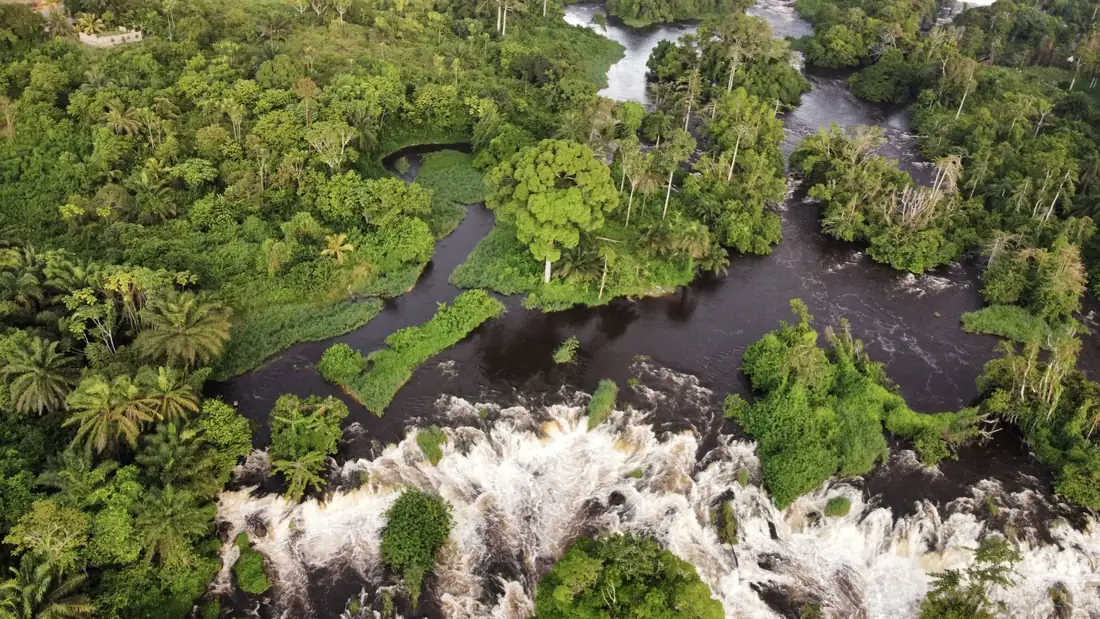
- South: Atlantic beaches at Kribi, the Lobé Falls tumbling straight into the ocean and Campo-Ma'an National Park.
- South-West: Mount Cameroon (4,040 m), Limbe's black-sand beaches and botanic garden, and the rainforest of Korup National Park.
- West: Bamiléké and Bamoun kingdoms: the royal palace and museum at Foumban, chiefdoms, craft villages and green highland resorts.
Bamenda and the Grassfields
Known for its cool climate and hilly terrain, Bamenda is a hub of commerce and culture in the North-West, famous for its colourful markets. The region is rooted in tradition, with powerful fondoms (kingdoms), crafts and festivals with spectacular traditional dances. Note that several governments currently advise against travel to the North-West and South-West regions.
Entry requirements
- Visa: most visitors need one. Apply through the official e-visa service at evisacam.cm at least 10 days before arrival; the visa is printed when you land.
- Yellow fever: proof of vaccination is required for entry.
- Passport: carry an onward or return ticket; check validity rules with your embassy.
Money
The currency is the Central African CFA franc (XAF or FCFA), fixed to the euro at €1 = 655.957 XAF. Cards work in larger hotels in Yaoundé and Douala; elsewhere, carry cash. Mobile money (MTN MoMo, Orange Money) is widely used.
When to go
In the south and on the coast, the main dry season runs from about November to February, with a shorter dry spell mid-year. The north is driest from roughly November to May — the best time for Bénoué and Waza national parks. Mount Cameroon treks are usually run in the dry season.
Getting there and around
International flights arrive at Douala (DLA) and Yaoundé Nsimalen (NSI). Intercity buses link the main cities; for national parks and remote areas, travel with a licensed guide or tour operator.
Staying safe
Security conditions vary across the country. At the time of writing, Canada advises against all travel to the Far North, North-West and South-West regions and to areas near the Nigeria, Chad and Central African Republic borders, and against non-essential travel to the North and Adamawa regions. Always read your own government's latest advice: Canada, UK, US.